
What’s in a Name?
Who was the Buel Scholar’s namesake? David Hillhouse Buel was born in 1817 in Troy, NY He was one of three brothers who were eventually called as rectors to serve the Emmanuel Episcopal Church in Cumberland, MD. D.H. Buel served Emmanuel from 1847–1857, and his most visible achievement was convincing the parish to build the Gothic Revival building that it now calls home.
However, Buel was deeply enmeshed in the quest for freedom in the United States in the mid nineteenth century. He married Mary Mayo Atkinson in 1857, the daughter of Thomas Atkinson, who became the third bishop of North Carolina. Bishop Atkinson founded a church school for enslaved boys that eventually became St. Augustine College, an Historical Black College. Atkinson also advocated for the ordination of Black Episcopal clergy, and for Black clergy being given responsibility for Black Episcopal Churches.
D.H. Buel was rector at Emmanuel during the pivotal years prior to the American Civil War. Although there is no surviving documentary evidence of his involvement, local oral history holds that he operated a station on the Underground Railroad in the basement of the church. This was operated with the assistance of Emmanuel’s sexton, a man thought to be Samuel Denson, who was himself a free Black man.
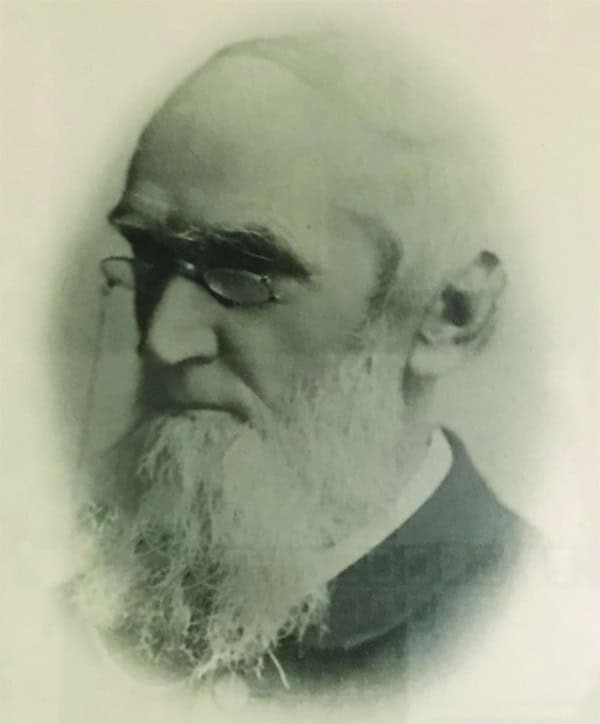
After his tenure at Emmanuel, Buel served churches in New York and Vermont. In 1872, he became Principal at the Ravenscroft Associate Mission and Training School. Founded by his father-in-law in Asheville, NC, the school trained young men for ministry.
David Hillhouse Buel’s consistent vision of hope and work in the cause of freedom for all encapsulate the mission of the Buel Scholars, building a brighter future and a community of love in Allegany County and beyond.
PROGRAM GOALS
- Cohort capacity is limited to 16 students per grade level.
- A retention rate of greater than 80% of Scholars will complete four six-week summer sessions.
- Each summer, 95% of the Scholars will complete the program, with 100% of those Scholars producing end-of-program presentations.
- At least 90% in each cohort will demonstrate an understanding of and achievement in their learning theme.
- At least 90% of all Scholars will demonstrate new skills which they have employed in relational, classroom, work, and social settings.
The life-skills that are assessed at the end of the program include: effective study habits; workplace etiquette (including appropriate clothes/appearance, communications, effective time management, peer-to-peer interactions, etc.); healthy interpersonal communications and conflict resolution strategies; positive life choices (including for nutrition and health/well-being/self-care, safe sexual relationships, advanced education, etc.); financial literacy and money management; and other selected emotional intelligence and life-skill applications.
SCHOLAR LIFE-SKILLS
The staff utilizes a four-point rubric system to measure life-skill proficiency before and after the program. Scores are measured by point totals on a continuum ranging from “Performance Plan Needed” [one point] to “Exemplary” [four points]. An assessment is done at the start of the program to establish a life-skill baseline, and again at the end of the summer program to measure growth. Student engagement, as observed by staff determines scoring during the assessment, and Scholars receive constructive ongoing guidance.
Using both staff evaluations and self-evaluations of each Scholar, Scholars will demonstrate an understanding of and achievement in their enrichment learning objectives, including an improved ability to exercise skills in relational, classroom, professional, and social settings.
PROGRAM ASSESSMENT
At the completion of each summer session, all Scholars, parents/guardians, instructors, and mentors have an opportunity to offer evaluative feedback regarding program quality, value, strengths, and weaknesses in order to improve the program.
LONGITUDINAL STUDY of the SUTTON SCHOLARS
Our sister program, the Sutton Scholars, demonstrates the sustained success that this model can have. After the fi rst graduating class in 2019, an ongoing longitudinal study was launched. Th e purpose of the study was to assess the mid- and long-term impacts of the enrichment program. Of the inaugural cohort in 2015, 100% graduated high school in 2019 and matriculated at college that fall. Over the past ten years, 100% of Sutton Scholars who completed the program over multiple summers enrolled in college, enlisted in military service, or pursued post-secondary vocational education, such as construction or HVAC certification.